How to Specify Traffic Cones for Roads, Facilities and Temporary Work Zones
A traffic cone is simple to deploy, but specifying the wrong cone can create unstable layouts, poor visibility, excessive handling, or unnecessary replacement cost. Road contractors, facility managers, event operators, utilities, and distributors should match cone height, base weight, body material, reflective treatment, and storage format to the actual work environment.
Begin with the traffic and exposure
Document vehicle speeds, approach distance, day or night use, indoor or outdoor exposure, wind, surface slope, duration, and how often the layout moves. A cone used around slow forklifts inside a warehouse faces a different risk from one guiding road traffic past an excavation.
Confirm the governing local specification before ordering. Cone height, colour, reflective bands, spacing, and placement may be prescribed by the road authority or site owner; product appearance alone does not establish compliance.
Balance height, footprint, and weight
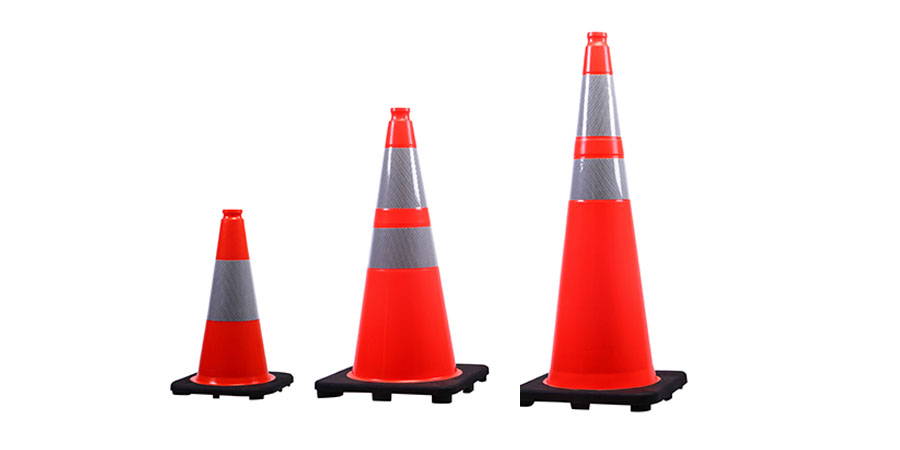
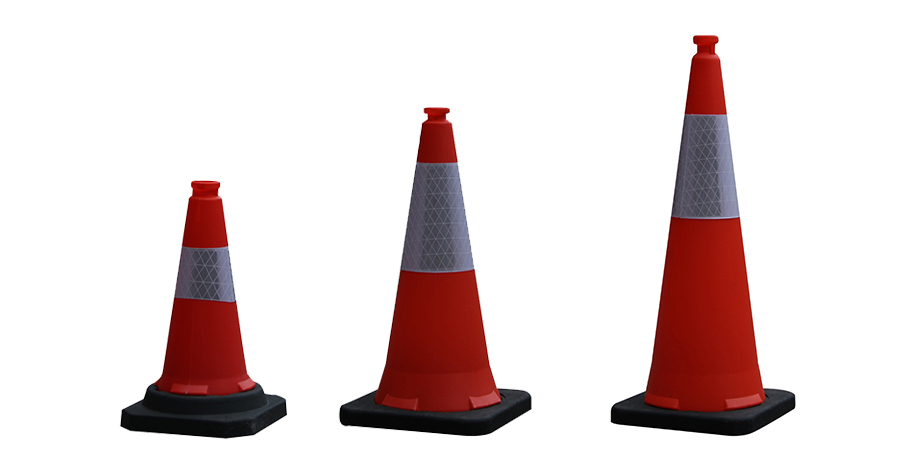
Taller cones are easier to see at distance but need more storage space and sufficient base stability. A wider or heavier base can resist movement, while excessive weight increases manual-handling effort. EastSea’s wide-body black-base cone range lists 450, 710, and 910 mm heights with weights of 1.5, 3.2, and 5.0 kg.
Consider wind, passing-air turbulence, vehicle contact, floor condition, and whether workers repeatedly load cones into vehicles. Test the intended configuration under realistic site conditions rather than relying on one dimension.
Choose construction for deployment frequency
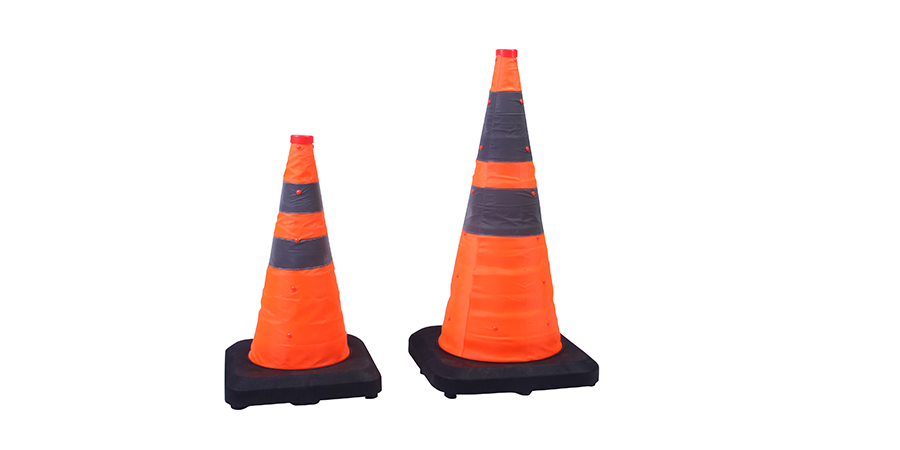
Conventional cones suit repeated general use, while collapsible cones save vehicle and cabinet space for emergency response, service fleets, and occasional deployment. EastSea’s black-base collapsible cones are listed at 50 and 70 cm high, weighing 2.6 and 3.6 kg.
Compare body material and base design
Flexible PVC-style bodies and blow-moulded PE bodies differ in stiffness, recovery, temperature response, colour retention, nesting, and replacement behaviour. A separate black base can add stability and make the cone easier to recognise against some surfaces. The American & Australia PE blowing cone range lists 450, 710, and 910 mm heights with several weight options.
Make visibility part of the complete layout
Reflective bands help at night only when headlights, band condition, orientation, and approach geometry are suitable. Cones do not replace advance warning signs, barriers, lighting, trained flaggers, or a documented traffic plan. Keep pedestrian routes accessible and prevent vehicles from entering the taper through gaps.
Inspection and storage protect the investment
Before deployment, check for split bodies, detached bases, dirt, faded colour, damaged reflective bands, and collapsed cones that no longer lock upright. Clean with compatible products, dry before storage, stack only as intended, and segregate damaged units. Record quantities so incomplete layouts are noticed before crews leave the depot.
Information for a useful quotation
- Country, authority, or site specification
- Application, traffic speed, duration, and environment
- Required height, base width, weight, colour, and reflective pattern
- Body and base material preference
- Quantity, packing, storage, and transport constraints
- Accessories, signs, lights, chains, or cone bars
Explore EastSea’s traffic cone range or contact EastSea with your operating conditions and required specification.