How to Choose a Cable Protector for Events, Work Zones and Industrial Sites
A cable protector is a small part of a site plan, but choosing the wrong one can create a surprisingly large problem. At an event, construction area, warehouse, broadcast site, or temporary power installation, exposed cables can be damaged by vehicles and carts while also becoming a trip hazard. A suitable protector organizes the crossing, shields the lines, and gives users a more visible route over them.
The best choice is not automatically the largest or heaviest model. Buyers should start with the cables, the people and vehicles crossing them, the surface, and the expected duration of use.
Begin with the lines that need protection
Count every cable or hose and measure its actual outside diameter, including couplings or connectors that may need to pass through the system. The usable channel must provide enough clearance for installation without pinching the line when the cover is closed. Separating power, data, audio, and other services into individual channels can make routing and maintenance easier.
A single large channel is practical for one thicker cable or hose. A multi-channel model is better when several smaller lines must remain organized. Extra unused channels can be helpful when a site is likely to expand, but they also increase the overall width of the crossing.
Match the crossing to its users
A pedestrian-only route has different needs from a service road. Consider who will cross the protector: walking visitors, wheelchairs, flight cases, pallet trucks, forklifts, passenger vehicles, or heavy service vehicles. Approach slope, surface texture, width, visibility, and stability all affect usability.
Do not select a product from a load figure alone. Vehicle speed, tire contact area, surface condition, temperature, installation method, and how the load is applied can change real-world performance. For public routes, accessible paths, emergency access, or regulated work zones, the responsible project designer should confirm the layout and applicable local requirements.
Compare channel layouts, not just outside dimensions
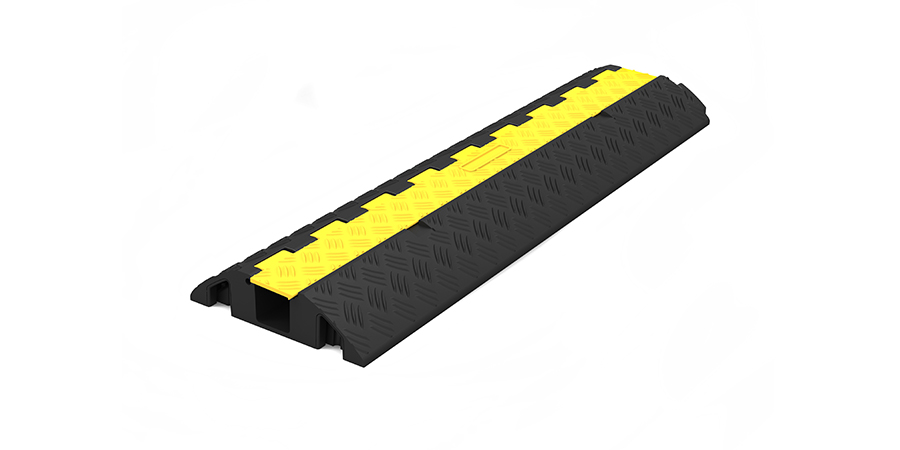
EastSea’s DH-CP-11M single-channel model is listed at 930 mm long, 250 mm wide, and 65 mm high, with a 50 mm channel. It is a compact option when one larger line needs to cross a route.
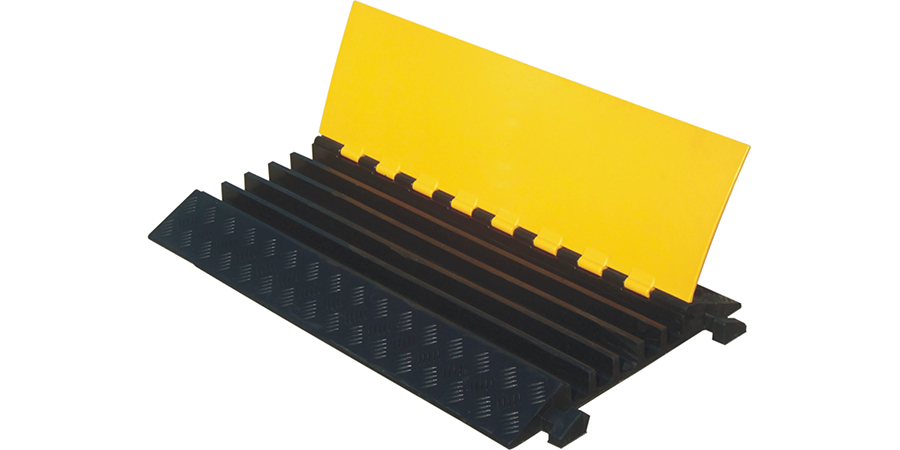
The DH-CP-2M five-channel model is listed at 900 mm long, 500 mm wide, and 55 mm high, with five channels measuring 42 × 42 mm. Corner sections are also available to help a route change direction. These examples show why channel count, channel size, and routing geometry should be checked together.
Consider material and frequency of use
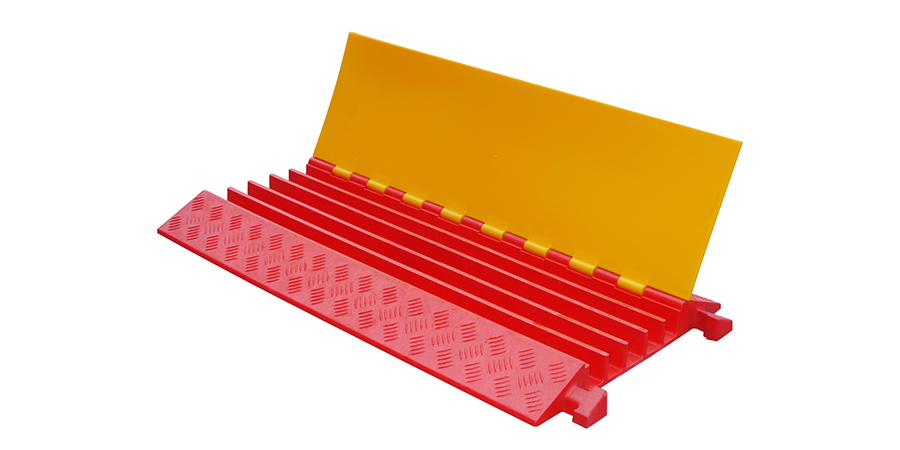
Rubber cable protectors are widely used for temporary crossings because their weight and surface grip can help them remain stable on suitable ground. Polyurethane options can provide a different balance of weight, durability, color, and handling. The correct choice depends on the application rather than the material name alone.
For frequent rental, touring, industrial, or repeated outdoor use, buyers should also evaluate hinge design, connector strength, replaceable parts, resistance to weather and cleaning chemicals, and how easily each section can be carried and stored. A lower unit weight may reduce handling effort, while a heavier unit may be useful where additional mass supports stability.
Installation is part of product performance
Lay the system on a firm, reasonably level surface and connect each module completely. Keep the route as straight as practical, use the correct corner pieces where direction changes, and make sure covers close without pressing on the cables. The high-visibility side should face approaching users consistently.
Inspect the crossing during use. Look for separated connectors, damaged covers, movement, debris, liquids, sharp edges, or cables that have shifted. If the traffic pattern or cable bundle changes, reassess the installation rather than assuming the original layout remains suitable.
A practical purchasing checklist
- Number, type, and outside diameter of cables or hoses
- Pedestrians, carts, wheelchairs, or vehicle types using the route
- Channel size, channel count, and required corner sections
- Surface condition, route length, and indoor or outdoor exposure
- Frequency of installation, removal, transport, and storage
- Required color, branding, packaging, and replacement parts
EastSea manufactures rubber and PU cable protectors in single- and multi-channel configurations for events, facilities, temporary works, and industrial applications. Explore the full cable protector range or contact EastSea with your cable sizes, traffic conditions, layout, and expected quantity for a project-specific recommendation.