How to Specify Flexible Edge Protection for Busy Facilities
Exposed edges in warehouses, production areas and service corridors are small details that can create repeated contact damage and avoidable injuries. Flexible edge protection can make these hazards easier to see and can soften low-energy contact, but it works best when the profile, mounting method and inspection routine are matched to the real location.
Start with the contact scenario
Identify who or what is likely to reach the edge. A pedestrian shoulder beside a doorway, a trolley near a wall return and a vehicle passing a column create different contact heights, approach angles and impact levels. Record the edge material, radius, exposed length, surrounding clearance and how often the route is used.
Flexible profiles are intended to improve visibility and reduce the severity of incidental contact. They should not be treated as structural barriers or substitutes for traffic separation where forklifts, vehicles or heavy equipment can strike with significant energy.
Choose the profile around the geometry
Square edges, round pipes, flat surfaces and projecting corners require different profile shapes. Measure both faces of the edge and check whether the protective section can sit evenly without twisting. Where several lengths meet, plan joints so that exposed gaps do not remain at the most likely contact point.
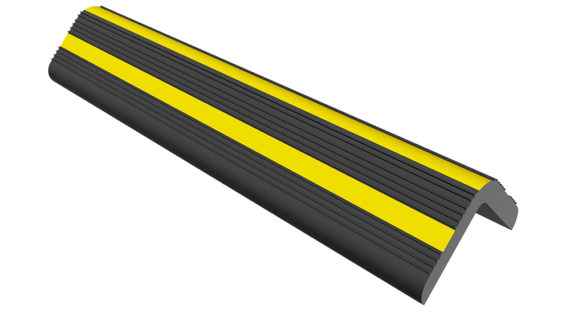
EastSea’s Flexible PVC Edge Protection Square, model BS-PEIP-5, is listed at 1000 × 40 × 40 mm and 1.8 kg. These published dimensions provide a useful starting point, but buyers should confirm fit, fixing method and required quantity using site measurements and photographs.
Balance visibility, material and environment
Contrasting colours can help personnel notice corners earlier, especially in visually busy areas. Visibility should be assessed from the normal direction of travel and under the actual lighting conditions. Do not rely on colour alone: floor markings, route design, mirrors or physical separation may still be required.
The product page describes a flexible PVC construction and an operating temperature range from -40°C to 90°C. For demanding environments, confirm exposure to sunlight, cleaning chemicals, oils, moisture and temperature cycles. Material suitability should be reviewed against the substances and conditions present at the facility.
Plan installation on a clean, sound surface
Before installation, remove dust, grease and loose coatings from the mounting area. Repair damaged substrates and allow the surface to dry. Follow the selected fixing method and check that the profile makes consistent contact along its length. Avoid stretching a flexible profile during installation, because stored tension can encourage lifting or movement later.
After fitting, inspect the route from both directions. Confirm that the protector does not narrow an access route unexpectedly, interfere with doors or machine guards, or create a snag point. Where hygiene or wash-down matters, include the edges and joints in the cleaning plan.
Inspect after contact and during routine maintenance
A simple inspection should look for loose sections, peeling edges, cuts, permanent deformation, fading, contamination and damage to the protected substrate. Inspect promptly after a known impact and include high-contact locations in normal safety walks. Replace a profile when it can no longer sit securely or provide a clear visual warning.
Keeping a small record of location, installation date and replacements can reveal repeat-impact points. If one corner is damaged frequently, the underlying traffic layout may need a wider route, additional guidance or a stronger protection system.
Details to include in a quotation request
- Edge shape, dimensions and total exposed length
- Clear photos showing the approach route and mounting surface
- Pedestrian, trolley, forklift or vehicle traffic near the edge
- Indoor or outdoor use, temperature and chemical exposure
- Preferred colour, quantity and fixing requirements
- Cleaning, maintenance and replacement expectations
EastSea’s Flexible PVC Edge Protection Square is designed for visible protection of exposed square edges in workplace environments. Send EastSea your measurements, photographs, operating conditions and quantity so the profile and installation approach can be reviewed for the actual application.