How to Plan Overhead Clearance Bars for Low-Height Access Routes
A low beam, service pipe or garage entrance can be expensive to repair after one unsuitable vehicle enters the area. An overhead clearance bar gives drivers an early, physical warning before they reach the structure. Its effectiveness depends on accurate height planning, good visibility and a mounting arrangement that suits the traffic route.
Measure the real limiting height
Survey the complete route rather than relying on a drawing. Check entrances, ramps, changes in floor level, signs, sprinklers, ducts, lighting and any equipment installed below the ceiling. The posted clearance should be based on the lowest relevant obstruction and the project’s operating allowance, confirmed by the facility owner or engineer.
Place the warning early enough
Drivers need time and space to stop or divert. Install the bar before the decision point, not directly beneath the obstruction. Consider approach speed, slope, turning movements, sight lines and where a rejected vehicle can safely turn around. Where traffic arrives from more than one direction, each approach may require its own warning.
Choose a visible, forgiving arrangement
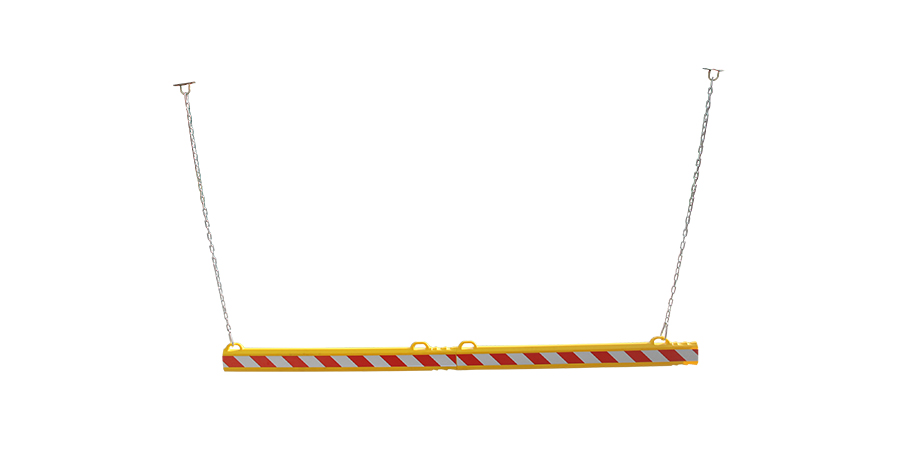
Alternating high-contrast colours and clear height text help drivers understand the warning. A suspended bar can swing when contacted, reducing the chance that a light touch immediately damages the building; however, it is still a warning device rather than a structural vehicle restraint. The bar length should suit the lane without extending into unrelated pedestrian or vehicle paths.
Plan installation and maintenance
Confirm that the overhead support can accept the suspension points and that chains or fixings are protected from loosening. Set the bar level at the approved warning height and verify it with a calibrated measurement after installation. Inspect chain condition, fasteners, visibility, printed height information and evidence of repeated contact. Any change to pavement levels or overhead services requires a new clearance check.
Prepare a clear project brief
EastSea’s Clearance Bar range supports parking garages, loading areas and access roads. For a useful quotation, provide lane width, required warning height, mounting points, preferred bar length, colour and text, quantity and destination.
Contact EastSea to discuss an overhead-clearance warning project.