How Flexible Guardrails Help Protect People, Racks and Equipment in Busy Facilities
In a busy warehouse or factory, a painted line can show where vehicles should travel, but it cannot absorb an impact. Forklifts, pallet trucks, service vehicles, and moving loads operate close to people, racks, doors, columns, and valuable equipment. A properly planned impact-recovery guardrail system adds a visible physical boundary and can help reduce damage when low-speed contact occurs.
The right barrier is not selected by color or height alone. Facility managers, safety teams, contractors, and distributors should begin with the actual traffic pattern, exposed assets, likely impact points, and available installation space.
Map the risk before selecting the barrier
Walk the vehicle route and identify intersections, blind corners, rack ends, loading areas, pedestrian doors, machinery, electrical panels, and structural columns. Review vehicle types, travel direction, speed, turning radius, load overhang, and the frequency of maneuvers. Near-miss records and existing impact marks often reveal where protection is most urgently needed.
A barrier should support a clear traffic plan. It must not create a new pinch point, reduce an emergency route, block access to equipment, or push vehicles into another hazard.
Choose height and geometry for the hazard
Low barriers can protect rack ends, walls, or equipment bases from contact near floor level. Taller guardrails create a more obvious separation and may be better where pedestrians, doors, or larger exposed areas require protection. Corners, ends, and transitions deserve special attention because they often receive concentrated impacts.
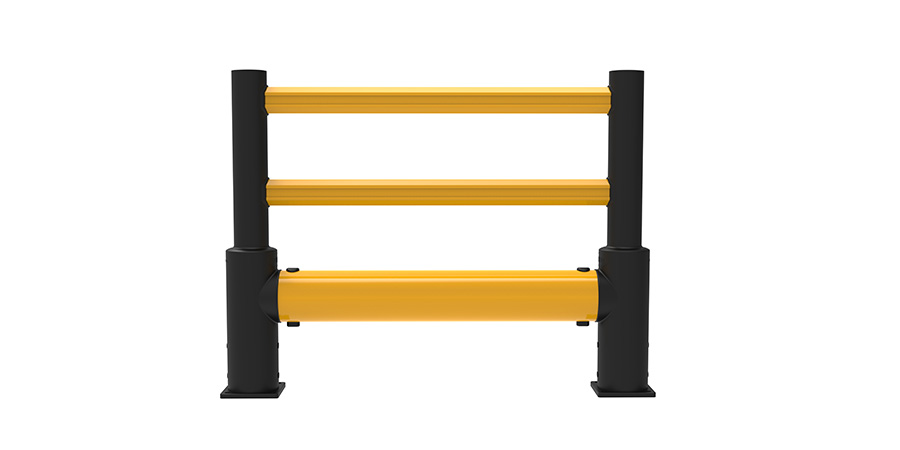
EastSea’s VN-GR-B1-C impact-recovery guardrail is listed at 1,500 mm long and 1,120 mm high. Its multiple horizontal elements provide protection at different heights. The final layout should be based on the vehicle envelope and the asset being protected.
Separate equipment protection from traffic guidance
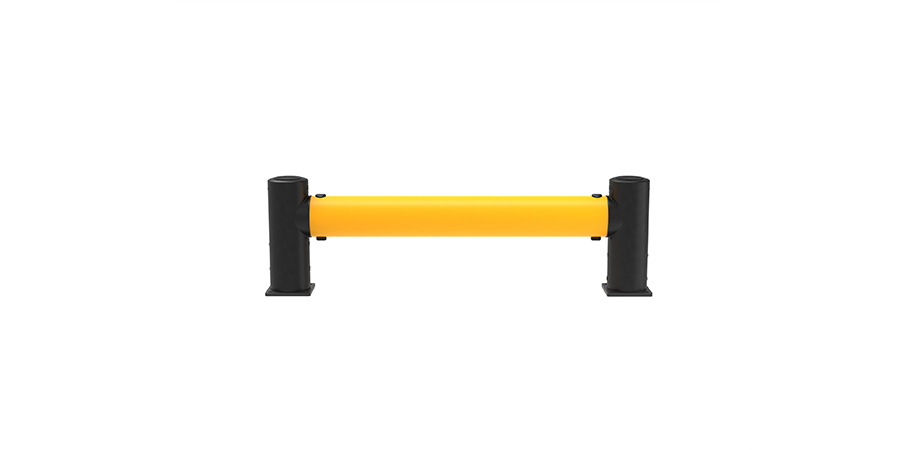
Not every location needs a full-height system. A compact equipment guardrail may be suitable in front of machinery, walls, columns, or restricted areas where the primary risk is lower-level vehicle contact. The VN-EGR-1 equipment guardrail is listed at 1,500 mm long and uses a single horizontal protective element between two posts.
Understand flexible and rigid protection
Rigid steel barriers and impact-recovery polymer systems behave differently. A rigid barrier transfers impact forces into the barrier, anchors, and floor. A flexible system is designed to deflect and recover, which may reduce damage to the barrier and vehicle in suitable applications. However, available deflection space must be considered so the moving barrier cannot contact the protected asset.
No barrier should be treated as universally suitable. Impact performance depends on vehicle mass, speed, angle, installation, floor strength, barrier length, and configuration. Project-specific test evidence and engineering judgment should guide high-risk applications.
Protect rack ends and floor-level assets
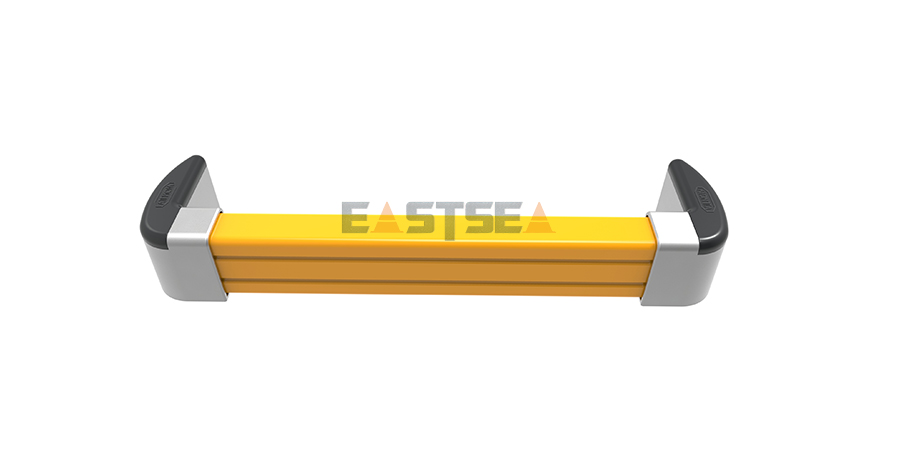
Rack ends are exposed during turning and pallet placement. A low-profile barrier can help keep vehicle wheels and forks away from the rack structure while preserving visibility across the aisle. EastSea’s VN-LGR-100 rack-end ground barrier is listed at 2,000 × 120 × 200 mm.
Installation and inspection complete the system
Confirm floor construction, slab thickness, anchor location, underground services, and required clearance before installation. Follow the approved fixing pattern and keep the protected asset outside the expected deflection zone. After installation, check alignment, anchor tightness, connectors, posts, and rails.
Inspect after any known impact and as part of routine facility checks. Look for loose anchors, cuts, permanent deformation, damaged connectors, floor cracking, and changes to traffic routes. Replace damaged components and reassess the layout when vehicles, racks, or operations change.
Information to provide when requesting a quotation
- Vehicle types, operating speed, and route direction
- Assets, pedestrian areas, or rack ends to protect
- Required barrier length, height, corners, and gates
- Floor construction and available deflection clearance
- Indoor or outdoor exposure and cleaning conditions
- Site drawing, photos, quantities, and installation plan
EastSea supplies impact-recovery guardrails, equipment barriers, rack-end protection, bollards, and related workplace-safety products. Explore the impact-recovery guardrail range or contact EastSea with your site layout and vehicle conditions.