How to Choose a Trench Cover for Safer Temporary Access
An open trench can turn an ordinary pedestrian route or work area into a serious access problem. A temporary trench cover can help maintain movement across an excavation, but only when its size, support, surface, securing method, and intended users match the site conditions. Choosing by panel dimensions alone is not enough.
Contractors, utilities, facility managers, and safety-product distributors should treat the cover as part of a complete temporary-access system. The opening, surrounding ground, traffic, edge protection, installation method, and inspection plan all matter.
Start with the opening and its supporting edges
Measure the clear trench width and length, then examine the surfaces that will support the cover. The panel must extend beyond the opening sufficiently to rest on stable ground or a properly designed support. Loose soil, broken pavement, uneven kerbs, or unsupported edges can reduce stability even when the panel itself is undamaged.
Allow for movement during installation and use. A cover that only just reaches both sides of the opening leaves little tolerance for positioning, surface irregularities, or accidental displacement. The responsible site designer should determine the required bearing area and fixing method.

Define who will use the crossing
A pedestrian crossing, a route for wheelchairs and small carts, and a vehicle route require very different solutions. Identify expected users, total traffic frequency, wheel loads, approach direction, and the possibility of misuse. A pedestrian cover should never be assumed suitable for vehicles unless the specific configuration has been evaluated and documented for that use.
For public areas and accessible routes, consider the transition at each edge, clear width, surface grip, openings, color contrast, and whether the cover creates a trip point. Local regulations and the project’s temporary traffic-management plan take priority over general product descriptions.
Compare dimensions and configurations
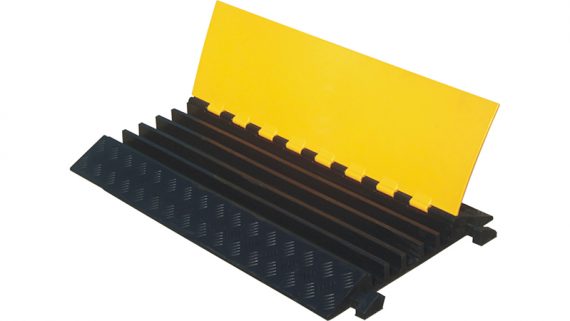
EastSea’s DH-PUP-2 steel-retainer plastic trench cover is listed at 1,200 × 800 × 44 mm and uses an HDPE panel. It is a compact option for smaller openings where a visible, portable temporary cover is required.
The DH-PUP-3 two-metre trench cover system is listed at 2,000 × 750 × 50 mm. Its longer panel format can suit different trench geometries, while the associated rail provides a separate vertical warning and separation element. Final selection should always be based on the complete installed configuration.

Decide whether edge protection is needed
A cover closes the horizontal opening, but it may not fully address approach guidance or exposure along the sides of a trench. Rails or barriers can make the work area more visible, discourage users from stepping off the protected route, and help define a controlled crossing.
Edge protection must be positioned so it does not narrow the route unexpectedly, create a new snagging hazard, or interfere with the cover. The rail, base, connectors, and panel should be considered together rather than as unrelated products.

Installation and inspection are essential
Before placing the cover, remove loose material and verify that supporting surfaces are firm. Position and secure the panel according to the site plan, check that it cannot rock or slide, and keep the textured face upward. Do not place cables, tools, or debris beneath the bearing edges.
Inspect the crossing before each shift and after impacts, heavy rain, excavation changes, or nearby vehicle movement. Look for cracks, deformation, loose fixings, displaced rails, contaminated surfaces, undermined edges, and changes in the opening. Remove the crossing from service if its condition or support is uncertain.
Project information to confirm before ordering
- Clear opening dimensions and required bearing area
- Pedestrian, accessibility, cart, or vehicle use
- Ground condition and available fixing method
- Required rails, barriers, signs, and approach guidance
- Indoor or outdoor exposure and project duration
- Transport, handling, storage, and inspection arrangements
EastSea supplies portable trench covers and related work-zone safety products for construction, utilities, maintenance, and temporary access projects. Explore the trench-cover range or contact EastSea with your opening dimensions, users, surface conditions, and layout for product selection support.