Cómo los sistemas separador de carril mejoran la seguridad en áreas de tráfico de uso mixto
Las líneas pintadas son esenciales, pero en muchos entornos ocupados no son suficientes. En una entrada de estacionamiento, carril bici, zona de trabajo, acercamiento al almacén o disposición temporal del tráfico, los conductores necesitan un límite que puedan reconocer temprano y seguir de forma natural. Un sistema separador de carril bien planificado añade orientación física y visibilidad sin convertir automáticamente cada límite en una barrera rígida de hormigón.
Para contratistas, distribuidores, administradores de instalaciones y compradores de proyectos, la pregunta importante no es simplemente, “¿Qué separador se ve mejor?” La mejor pregunta es, “¿Qué combinación de base, poste, reflector, método de fijación y diseño es la adecuada para el movimiento de tráfico que necesitamos gestionar?”
Donde las marcas pintadas necesitan apoyo adicional
Las marcas de carretera funcionan mejor cuando están limpias, visibles y esperadas. Los sitios reales son más complicados. Lluvia, polvo, sombras, deslumbramiento de faros, superficies desgastadas, tráfico de entrega y conductores desconocidos pueden reducir la eficacia de un límite pintado. En áreas de uso mixto, las consecuencias de una línea perdida pueden incluir un carril bici bloqueado, una fusión insegura, un vehículo que entra en un espacio peatonal, o contacto repetido con bordillos y equipo.
Un separador de carril crea una señal visual y física más fuerte. Puede ayudar a definir una ruta, desalentar el cruce casual de carriles, y organizar el movimiento en lugares donde barreras permanentes a gran escala sería excesivo o difícil de instalar.
Comience con la aplicación, no con el producto
El mismo separador no se debe especificar automáticamente para cada sitio. Comience identificando los usuarios, velocidades, ángulos de aproximación y condiciones de mantenimiento.
- carriles para bicicletas: priorizar la orientación visual continua, un perfil de perdón y un espacio suficiente para el drenaje y la limpieza.
- Posibilidades de aparcamiento: considere girar caminos, contacto con neumáticos de baja velocidad, cruces peatonales y la visibilidad del separador bajo iluminación artificial.
- Zonas de trabajo: favorecer una instalación rápida, limpiar el enrutamiento temporal, componentes reemplazables y diseños que se pueden ajustar a medida que cambia el proyecto.
- Fábricas y áreas logísticas: cuenta con carretillas elevadoras, vehículos de reparto, maniobras repetidas, condiciones de suelo y acceso a rutas de carga o emergencia.
- Enfoques peatonales: evitar crear un punto de viaje inesperado y preservar la ruta accesible requerida por el proyecto.
Elija el elemento de guía vertical correcto
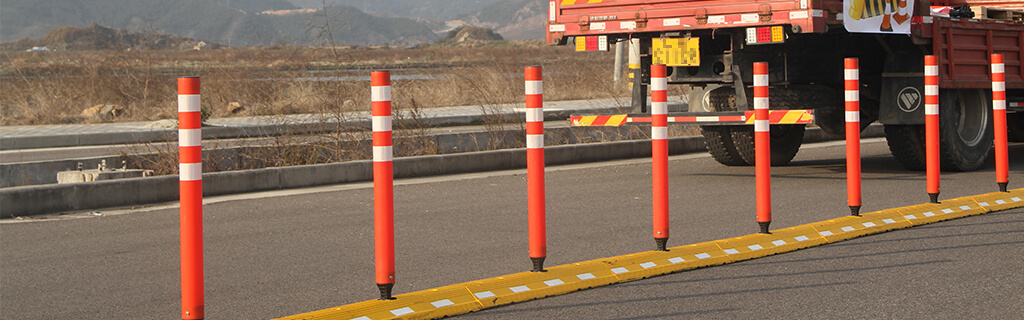
El componente vertical es lo que muchos conductores notan primero. Los postes flexibles proporcionan una indicación estrecha y altamente visible del borde del carril y pueden ser apropiados cuando es posible un contacto ocasional de baja velocidad. Los paneles de recuperación ofrecen una cara reflectante más grande y pueden dar a los conductores una señal direccional más fuerte en transiciones, islas o ubicaciones con geometría más compleja.
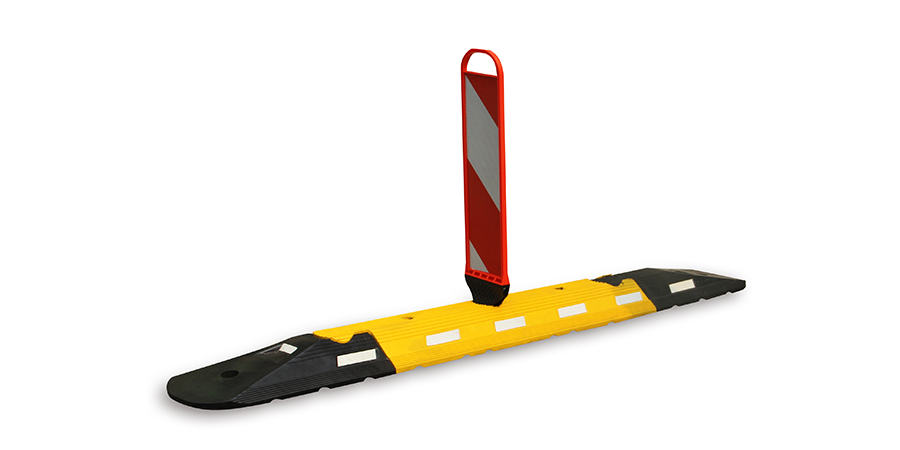
Un panel de recuperación proporciona una superficie reflectante más amplia para una orientación visual más fuerte. La visibilidad debe evaluarse desde el enfoque del conductor, no sólo desde una posición de pie junto al producto. La altura del poste, el área reflectante, el contraste de color, el ángulo del faro, el desorden de fondo y el espaciamiento entre las unidades influyen en lo temprano que un conductor puede entender la ruta deseada.
El diseño de la base afecta a toda la instalación
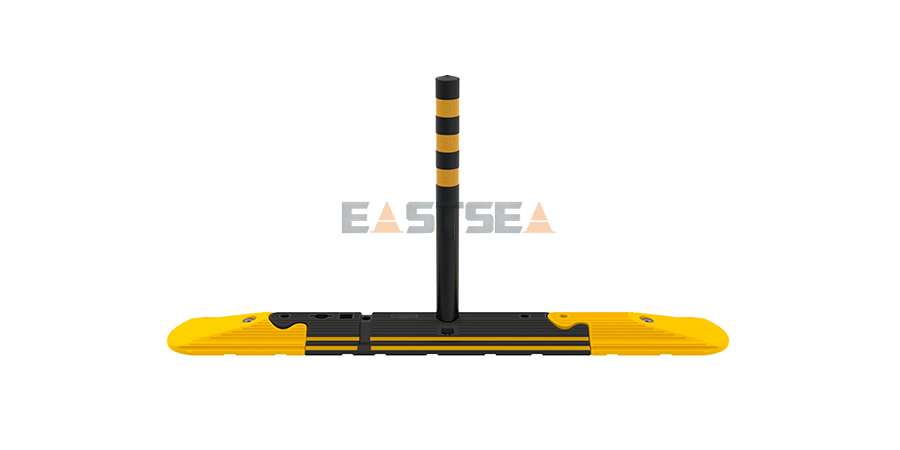
Una base separadora necesita ser visible sin crear un borde innecesariamente agresivo. Consideraciones importantes incluyen anchura, altura, perfil final, textura de la superficie, conexión entre módulos, drenaje y la posición de los anclajes. Una aproximación cónica puede reducir el contacto brusco con los neumáticos, mientras que las secciones modulares hacen que los componentes dañados sean más fáciles de reemplazar.
Plan de instalación y mantenimiento
Incluso un producto duradero funcionará mal si el plan de diseño, anclaje o mantenimiento no es adecuado. Antes de la instalación, confirme el estado del pavimento, los servicios subterráneos, el hardware de fijación, el camino de drenaje y la limpieza requerida. Compruebe que el diseño elegido no obstruya cruces, puertas, acceso al fuego o circulación accesible.
Después de la instalación, las inspecciones deben centrarse en anclajes sueltos, bases dañadas, reflectores faltantes, postes inclinados, acumulación de suciedad y cambios en el patrón de tráfico circundante. Los postes y paneles reemplazables pueden reducir el tiempo de mantenimiento porque la base completa puede no necesitar ser removida después de daños menores.
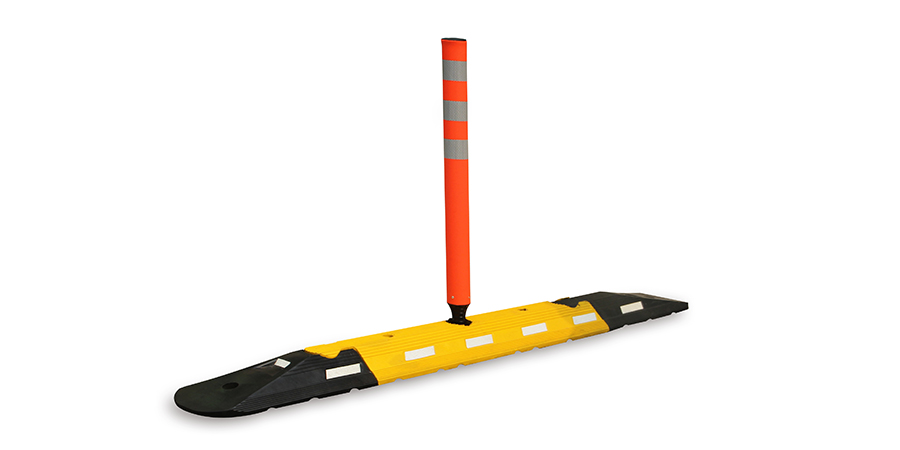
Los puestos de recuperación reemplazables pueden simplificar el mantenimiento después de un contacto menor. Un sistema es más valioso que un único componente
La separación efectiva del carril depende de cómo las piezas funcionan juntas: la base define el límite, el poste o panel atrae la atención, los elementos reflectantes soportan la visibilidad nocturna y el diseño comunica una ruta clara. Seleccionar estos elementos como sistema ayuda a los compradores a comparar el rendimiento práctico en lugar de comparar el precio unitario solo.
EastSea desarrolla y fabrica productos de seguridad de caucho y plástico para el tráfico, estacionamiento, zona de trabajo, eventos, accesibilidad y aplicaciones industriales. Las opciones de separación de carriles disponibles incluyen postes flexibles, paneles de recuperación, bases modulares y productos de delineación relacionados. Dimensiones, colores, configuraciones reflectantes y embalaje se pueden discutir para requisitos de distribuidor y proyecto.
Planning a bicycle lane, parking layout, temporary work zone, or industrial traffic route? Review the EastSea lane separator range or contact the EastSea team with your drawings, required dimensions, expected traffic, and installation conditions.
- Posibilidades de aparcamiento: considere girar caminos, contacto con neumáticos de baja velocidad, cruces peatonales y la visibilidad del separador bajo iluminación artificial.